A useful LED upgrade matches brightness, color appearance, fixture conditions, and compatible controls to the way you use each room. Compare product information and installation scope before ordering. Energy savings depend on the actual wattage and operating hours, so one blanket percentage does not describe every home.
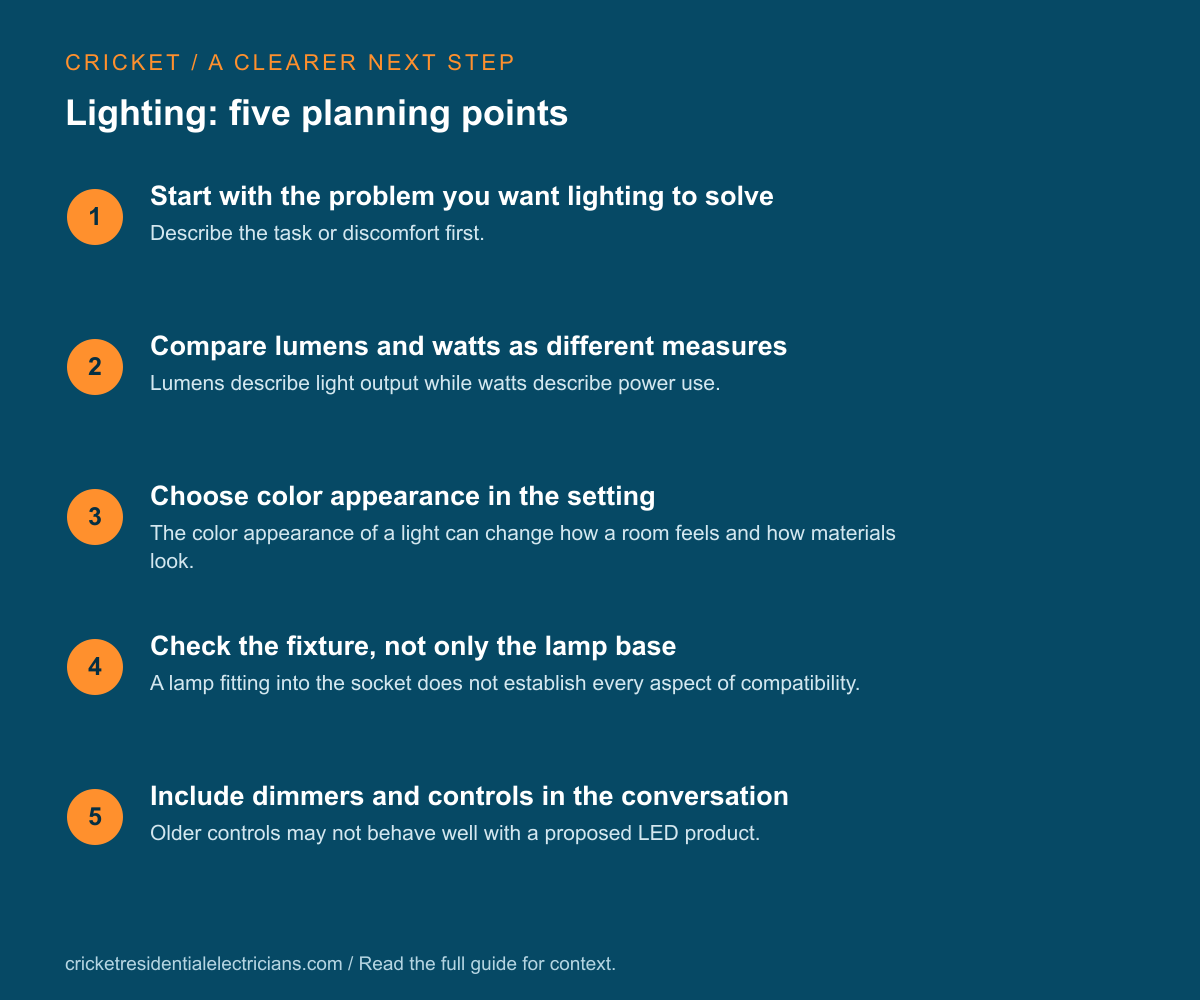
Start with the problem you want lighting to solve
Describe the task or discomfort first. A dark preparation surface, glare at a desk, harsh evening light, and an outdoor entry each call for a different conversation. Simply installing the brightest available lamp may leave the original problem unresolved. Note when the room is used and which surfaces need illumination. Photos taken during ordinary use can help explain the layout if they can be collected safely. A useful plan connects the fixture and its position to the room, rather than treating every lamp in the house as an identical replacement opportunity.
Compare lumens and watts as different measures
Lumens describe light output while watts describe power use. A replacement decision should compare the light you need and the product's electrical consumption separately. The Department of Energy's purchasing guidance includes product comparisons that illustrate this distinction. For a household plan, read the actual product specifications rather than assuming the old wattage must be matched by the new lamp. A lower wattage can be useful when the new product supplies suitable light, but the room still needs to be considered. Marketing language about equivalence does not replace checking output, distribution, and fixture suitability.
Choose color appearance in the setting
The color appearance of a light can change how a room feels and how materials look. Compare the product information and, when practical, view a suitable sample in the intended room before buying many identical lamps. Explain whether you want continuity with nearby spaces or a deliberate change. Different rooms can have different goals, but an accidental mix in one visible area may be distracting. Avoid promising that one color setting will suit every task or every person. The point is to make a considered choice that works with the room, finish colors, and daily routine.
Check the fixture, not only the lamp base
A lamp fitting into the socket does not establish every aspect of compatibility. Enclosed fixtures, physical dimensions, temperature limits, outdoor exposure, and product instructions can affect the choice. An integrated LED fixture may involve a different replacement plan from a fixture with replaceable lamps. Keep the model details and installation instructions available for the electrician. Tell the office whether you want to retain the existing fitting or change it. If the mounting or wiring also needs attention, that belongs in the scope rather than being treated as an incidental bulb change after the products arrive.
Include dimmers and controls in the conversation
Older controls may not behave well with a proposed LED product. Flicker, limited dimming range, or unexpected behavior can be linked to compatibility as well as other installation conditions. Supply both the light and control model when asking about a change. If you want a timer, motion sensor, or smart control, explain how you expect it to operate and whether existing switching needs to remain. Do not assume every advertised feature can be added to any wiring arrangement. Ask what must be assessed before the final products and installation boundaries are selected.
Separate a retrofit from a new layout
Replacing suitable lamps in existing fixtures is a different project from installing new lighting positions. New locations may involve wiring, mounting, access openings, or circuit changes. A ceiling height or finished surface can affect practical access and cost. Describe the intended number of fixtures and any areas where the current light is poorly placed. Ask which work is included and who handles related finish repairs. Comparing these scopes clearly helps prevent a small product purchase from becoming an unclear building project. The proposed electrical work should follow the room's actual needs and installation conditions.
Estimate energy use with your own routine
To compare electricity use, you need the old and new wattage, the number of lights, and their operating hours. The electricity rate also matters when translating energy into a bill estimate. A rarely used closet light has different potential from lighting left on for much of the day. Controls can change operating time, but the effect depends on settings and use. Avoid applying one advertised saving to the whole house without checking those assumptions. Keep the calculation transparent and separate product power consumption from installation cost, maintenance expectations, and personal preferences about the quality of light.
Plan outdoor lighting for its exposure
An outdoor fitting needs to suit the setting and the manufacturer's instructions. Tell the office about rain, irrigation, covered spaces, pathways, and nearby water. Mounting and routing should support normal use without creating an unsuitable cable arrangement. A fixture selected for an interior room is not automatically appropriate outdoors. If existing equipment has been damaged by moisture, stop using it and arrange an assessment rather than treating a new lamp as the repair. Describe the actual exposure at your property in Phoenix, Lowell, San Antonio, or Spicewood instead of relying only on the product's appearance.
Compare proposals on the same boundaries
List fixtures, lamps, controls, wiring, mounting, disposal, access equipment, and testing when these items apply. Clarify who supplies each product and whether model substitutions need approval. A quote that includes new controls and wiring cannot be compared directly with one that assumes a lamp swap in existing equipment. Ask what happens if the assessment finds a separate issue. Confirm scheduling and any power interruption, especially in occupied or managed premises. A clear proposal should make it easy to understand both the desired lighting result and the electrical work accepted to achieve it.
Keep the product details after installation
Retain model information for lamps, fixtures, and controls so future replacements remain compatible. Review accessible settings and the manufacturer's maintenance instructions. If flickering or a protective trip develops, report when it happens and which equipment is involved. Do not alter wiring or keep using a visibly damaged device. Cricket's lighting and energy efficient lighting pages explain the service conversation, and the local office can confirm the work accepted for your property. A successful LED project gives you suitable light, understandable controls, and a defined installation, with any energy comparison based on the actual products and routine.