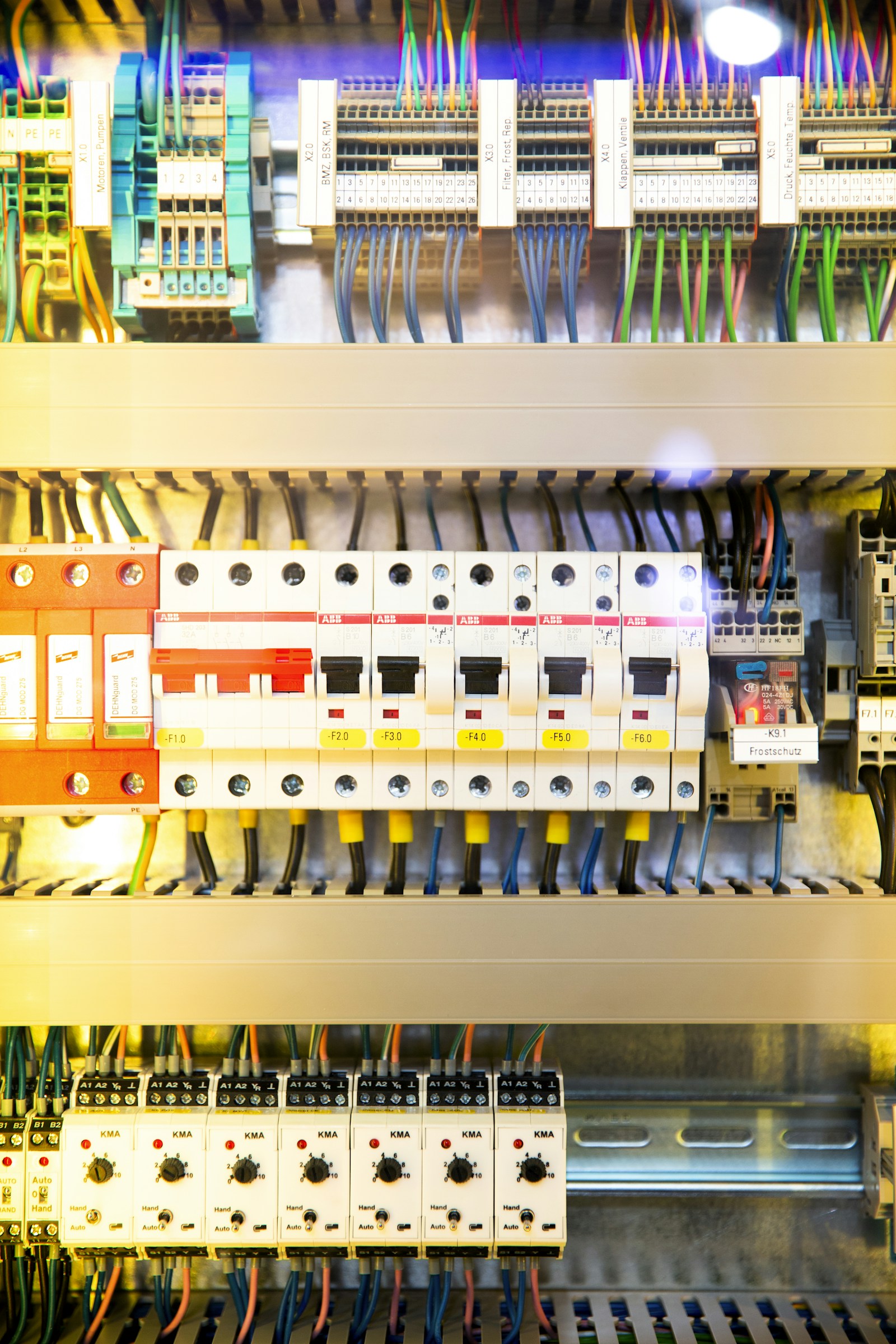
A circuit breaker that keeps tripping needs its cause investigated. Overload, a fault, connected equipment, or a protective device problem can produce similar symptoms. Stop repeatedly resetting it, keep away from damaged equipment, and arrange an electrical assessment. If there is fire, smoke, injury, or immediate danger, move away and call 911.
A trip is information, not the diagnosis
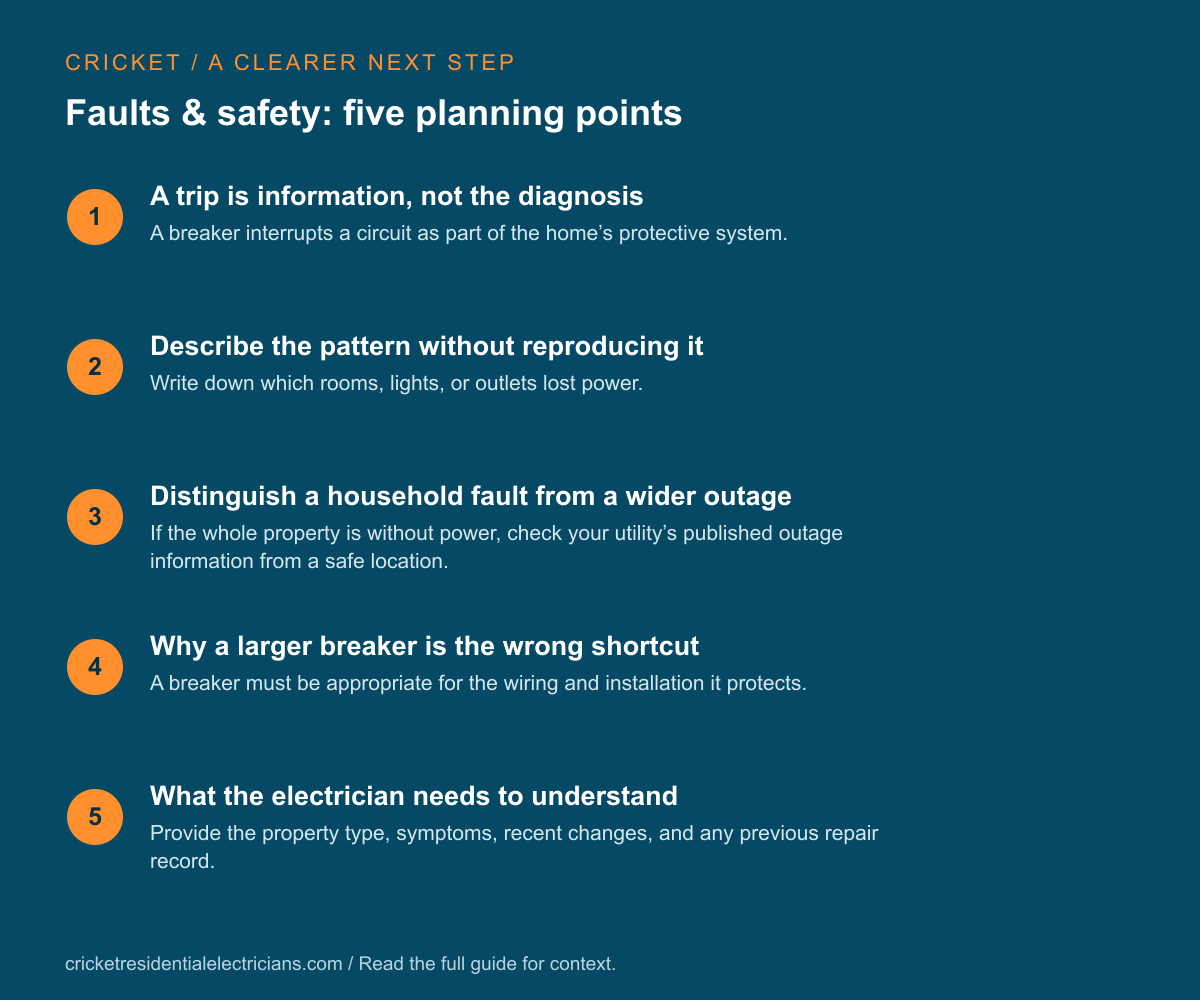
A breaker interrupts a circuit as part of the home's protective system. The fact that it has operated does not identify the exact problem. Replacing the breaker, adding another power strip, or trying to hold the switch on skips the important question: what caused the interruption? The Electrical Safety Foundation explains the protective role of breakers and recommends professional diagnosis when problems continue. For a homeowner, the useful first step is to record what happened during normal use and stop using equipment that appears unsafe. You do not need to open the panel to make a meaningful service request.
Describe the pattern without reproducing it
Write down which rooms, lights, or outlets lost power. Note the approximate time and any equipment that was already operating. Did the interruption coincide with a particular appliance, a recent renovation, or a new item plugged in? If the event has happened more than once, say whether the pattern seems consistent or intermittent. These details can help an electrician frame the investigation. Do not deliberately repeat a trip or operate a sparking device to demonstrate it. A description of an earlier event is safer and more useful than creating another one for a video.
Distinguish a household fault from a wider outage
If the whole property is without power, check your utility's published outage information from a safe location. Neighbors being affected may provide context, but it does not establish the condition of your own electrical equipment. A single room or circuit behaving differently is also important to report. Explain what remains powered and what does not. Do not approach damaged service lines or inspect outdoor equipment after water exposure. The utility and electrician may have different responsibilities, and the office can discuss which information is needed before a visit is planned. Avoid assuming every interruption is a failed breaker.
Why a larger breaker is the wrong shortcut
A breaker must be appropriate for the wiring and installation it protects. Increasing its rating merely to prevent trips can defeat that relationship and create a serious hazard. The same caution applies to substituting unfamiliar parts or bypassing a protective device. An assessment should establish the circuit conditions and compatible equipment before a repair is selected. If a contractor proposes a replacement, ask what findings support it and whether the underlying cause has been identified. The correct question is whether the circuit and protection suit the actual use, not whether a different switch can be made to remain on.
What the electrician needs to understand
Provide the property type, symptoms, recent changes, and any previous repair record. Mention heat, buzzing, odor, moisture, visible damage, or a shock without moving closer to investigate. An electrician may need to assess connected equipment, devices, wiring, protection, and supply conditions. Not every visit uses the same tests, and an intermittent problem may require additional investigation. Ask what the initial diagnostic work includes and when repair approval is needed. This makes it easier to compare a diagnostic visit with an installation quotation, which are different services even when both begin with a telephone conversation about the same circuit.
Prepare access and protect your schedule
Tell the office where the electrical equipment is located and whether any rooms are locked, shared, or occupied by tenants. Identify the person authorized to approve work. Explain equipment that cannot be interrupted without preparation and ask about the possible need for downtime. Move ordinary stored items only where it is safe to do so; do not remove panel covers or handle exposed connections. If the property is managed, coordinate the visit through the responsible contact. Access planning helps the assessment proceed, but it does not remove the need to confirm the scope and findings once the electrician is on site.
Read the proposed repair as a scope
The proposal should explain what was found, which circuit or equipment is involved, and the work included. Ask about parts, testing, access assumptions, and anything excluded. A repair at a device is different from a new circuit, broader wiring work, or a panel change. If more than one option is offered, ask which need each option addresses. A lower headline amount can reflect a narrower scope, while a larger proposal needs an explanation of its boundaries. Keep the discussion tied to the findings rather than treating the symptom alone as proof that every possible upgrade is necessary.
Keep a record if the problem returns
Retain the date, description, findings, and repair details. If another interruption occurs, record whether it affected the same area and equipment. Share that information with the office rather than assuming the original component failed again. A recurrence can be related to the same fault or a different condition, and the distinction matters. Ask whether further work was recommended and whether it remains outstanding. Keep manufacturer instructions for connected equipment available, too. The goal of the record is to give the next assessment context, not to create a home troubleshooting procedure that involves opening or altering electrical equipment.
Put the local context in the call
Phoenix, Lowell, San Antonio, and Spicewood properties can have different layouts, equipment, and access arrangements. Describe your actual home instead of relying on a general statement about the city. Long operating hours, an older alteration, an outdoor circuit, or a shared panel may be relevant when they apply to the property. Use the matching Cricket location phone and give your ZIP code. The four supplied Google profiles list open 24 hours, but current response and appointment availability must be confirmed. A call about a trip should lead to a clear next step and an agreed diagnostic scope.
Know when the situation changes
If you notice smoke, fire, active arcing, injury, or immediate danger, move away and call 911. Do not stay near equipment to gather better evidence. For a recurring fault without that immediate danger, stop repeatedly resetting the protection and request qualified help. Cricket's electrical troubleshooting pages explain the information useful for an assessment, while the local office can confirm coverage and the work accepted. The practical outcome you want is an explanation of the cause, a defined repair, and a record of any limits or follow up. A circuit that happens to stay on once is not evidence that the original concern is resolved.